Md. Mustak Khan
Researcher in Phytomedicine
B.Sc. (Honours) & M.S. in Biochemistry and Molecular Biology, University of Chittagong, Bangladesh. Working across experimental wet-lab biology and computational drug discovery.
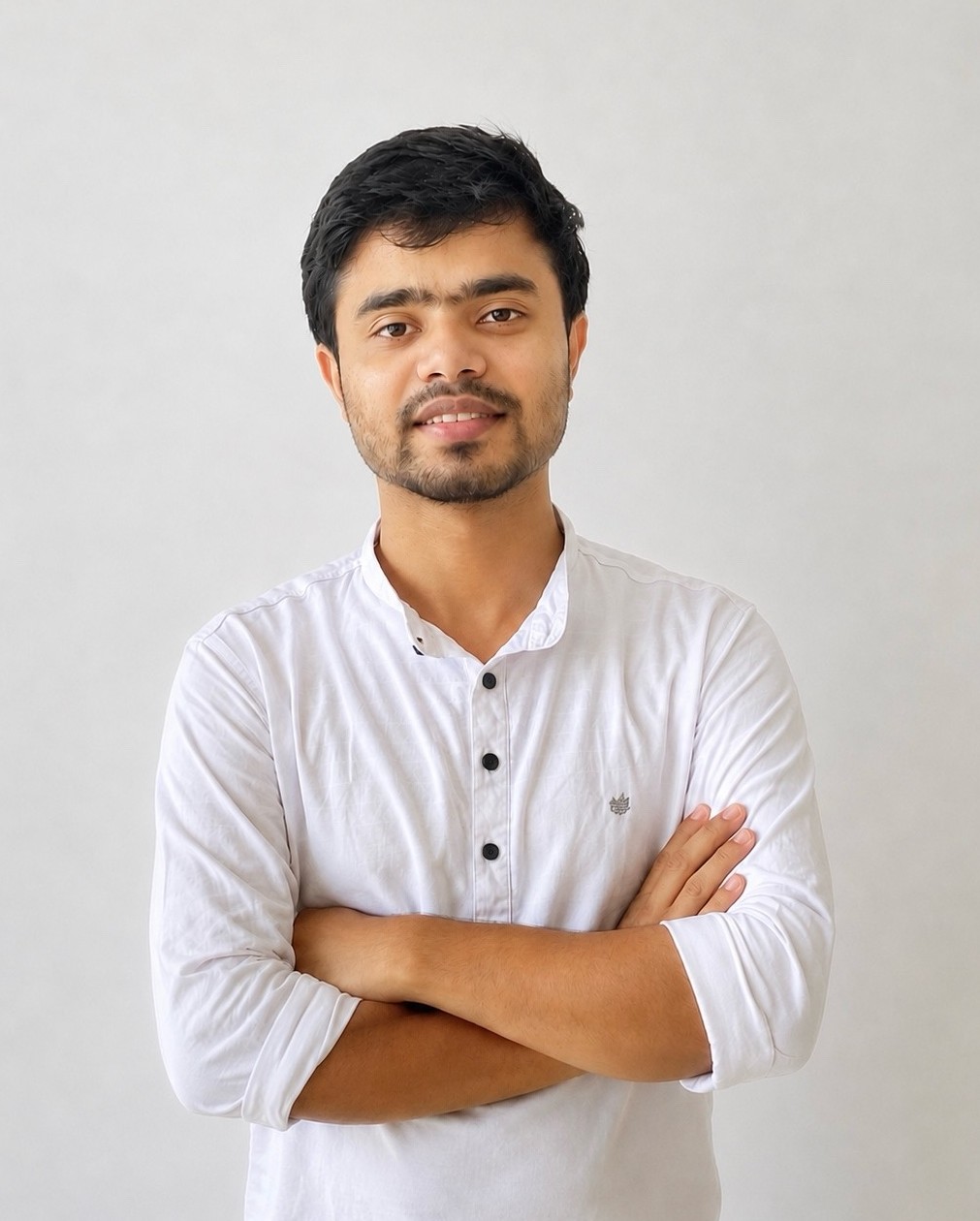
Researcher in Phytomedicine
B.Sc. (Honours) & M.S. in Biochemistry and Molecular Biology, University of Chittagong, Bangladesh. Working across experimental wet-lab biology and computational drug discovery.
Recent academic accomplishments, published research, and project milestones.
A multi-level computational analysis identifies Ocimum basilicum phytochemicals as potent inhibitors of the Marburg virus VP40 matrix protein published in Scientific Reports (DOI: 10.1038/s41598-026-71976-3).
Molecular Pharming: Advances, Applications, and Future Prospects in Biotechnology and Medicine published in Engineering in Life Sciences (DOI: 10.1002/elsc.70075).
Completed flagship thesis: "In silico and in vivo study of antioxidant activity of phytochemicals from Houttuynia cordata, a perennial herb using molecular docking and Caenorhabditis elegans model."
Co-authored research under review on multi-epitope monkeypox (MPXV) vaccine design and psychometric validation of the Academic AI Usage & Dependency Scale (AAIUDS).
Leading a 4-month advanced research internship at BioPC covering CADD, DFT, CAVD vaccine design, cancer bioinformatics, and manuscript writing. Registration deadline: 20 Sep 2026. Learn more →
A brief introduction to my scientific journey, background, and multidisciplinary focus.
Md. Mustak Khan — Researcher in Biochemistry, Molecular Biology, Phytomedicine, and Bioinformatics at the University of Chittagong.
I serve as Lab Manager and Graduate Research Assistant at the Laboratory of Food Bioactives and Molecular Health (March 2023 – Present), overseeing operations, mentoring students, and executing in vivo C. elegans assays (37 °C thermal survival across hours, thrashing locomotion, lifespan curves, and brood size toxicity checks). Concurrently, I serve as a founding member and Research Project Lead at BioPC, where I develop computational drug discovery pipelines, lead training workshops in CADD and network pharmacology, and build digital tools for the scientific community.
My flagship MS thesis investigated the antioxidant activity and therapeutic potential of phytochemicals from Houttuynia cordata (a perennial herb) by integrating in silico molecular docking with comprehensive in vivo longevity, 37 °C thermal survival, thrashing locomotion, and brood size toxicity evaluation in Caenorhabditis elegans.
Chronological milestones in education, leadership, and research discoveries.
Completed 4-year undergraduate degree with comprehensive laboratory training in cellular biochemistry, enzymology, molecular genetics, microbiology, and biochemical toxicology.
Spearheading computational drug design, immuno-informatics for epitope-based vaccines, pan-cancer genomics, and mentoring students in computational biology workflows.
Managing laboratory operations, chemical inventories, and biosafety protocols (merging the former Laboratory of Applied Biosciences & Laboratory of Food Science and Nutraceutical). Executing C. elegans genetics, longevity assays, fluorescence microscopy, and bioactive nutraceutical antioxidant evaluations.
Gained hands-on experience in computational genomics, vaccine design, sequence alignment, and the applications of AI and machine learning in biomedical and healthcare research.
Pursuing graduate research centered on the interdisciplinary evaluation of medicinal plant extracts using C. elegans model genetics, spectrophotometric assays, and computational drug discovery.
Carried out thesis: "In silico and in vivo study of antioxidant activity of phytochemicals from Houttuynia cordata, a perennial herb using molecular docking and Caenorhabditis elegans model."
Published review article on molecular pharming and biopharmaceuticals in Engineering in Life Sciences (Wiley), bridging plant biotechnology with modern translational medicine.
Published peer-reviewed original research identifying Ocimum basilicum phytochemicals as potent inhibitors of Marburg virus VP40 protein via multi-level computational biology and 500 ns MD simulations.
Proficiencies across experimental wet-lab biology, computational CADD, data science, and academic outreach.
C. elegans culture & lifespan assays, fluorescence microscopy, phytochemical extraction, and in vitro antioxidant assays (DPPH/ABTS/FRAP).
AutoDock Vina, PyRx, SwissADME, Discovery Studio, Cytoscape, STRING, and network pharmacology target prediction pipelines.
Python, R programming, tidyverse/ggplot2, statistical modeling, ImageJ biological image analysis, and Git/GitHub.
Peer-reviewed manuscript writing, literature synthesis, thesis drafting, citation management, and academic presentation.
Curriculum design, hands-on workshop facilitation, student mentorship, and bio-community leadership via BioPC.
Interdisciplinary investigations across phytochemical nutraceuticals, computational biology, and in vivo model systems.
A Perennial Herb Using Molecular Docking and Caenorhabditis elegans Model
Phytochemical extraction, total phenolic/flavonoid profiling, and multi-assay antioxidant evaluations of indigenous plant samples.
Leading multi-epitope vaccine design (Monkeypox MPXV), antiviral drug discovery (Marburg virus VP40 inhibitors), psychometric AI scale modeling (AAIUDS), and network pharmacology via BioPC Lab.
Conducting 37 °C thermal stress survival assays across different hourly timepoints, thrashing assays for locomotion movement, solid-media lifespan curves, and brood size / progeny toxicity screening.
Peer-reviewed contributions in leading scientific and biotechnology journals.
Scientific Reports | Nature Portfolio / Springer Nature
Engineering in Life Sciences | Wiley-VCH Verlag GmbH & Co. KGaA
Open for research collaborations, academic exchanges, and computational biology projects.
I welcome research collaborations, student inquiries, speaking invitations, and peer discussions. Reach out directly or connect across academic platforms.
Status: Open to collaborative research projects and computational workflows.